Happy Herbivore Blog

Summer Cooking: How to Cook Without an Oven or Stove

Posted by: Lindsay S. Nixon |

Category: Advice

I find it almost amazing that Scott & I have lived in so many different places and we've never had air conditioning. Boston, New York City, Colorado, Lake Tahoe, Charleston, Los Angeles — none of our apartments had air conditioning. Even in Europe, air conditioning was a rarity. 

This means by the end of May, I would completely abstain from any kind of "baking" until October. I also found myself avoiding the stove, too. Standing over a hot flame in an already hot and stuffy apartment during the sweltering summer? No thanks! (Our apartments have also always been very tiny, which made it even worse. Any cooking turned the place into a sauna). 

So was my life limited to salads? Heck no! 


Kim G. made HH Portobello Steaks on the grill! (shared via Facebook).

I love a good salad, especially in the summer, but I still like having cooked foods like beans, potatoes and rice — just without using my stove. 

Although my inner minimalist hates to suggest more appliances, if you live without air conditioning or you live someplace that gets very hot, it's well worth adding to your collection (plus you will use them year-round).

Electric Pressure Cooker ($99.99)

This is my favorite appliance of the bunch and if you can only buy one item, this would be it (though it's the most expensive). 

What I love about my electric pressure cooker is that I can cook my vegetables, grains and beans without turning on my stove and it cooks my food super fast. Black beans in 15 minutes without soaking overnight! Corn on the cob in 1 minute! I also love that I don't have to keep an eye on it (I can cook beans while doing something else) and it's fantastic for travel. We take it with us every time we travel so we can make healthy, nourishing meals in our hotel room in minutes. 

The pressure cooker gets me through the summer. I use it twice a day most days. I'm always making a big batch of beans, or rice or potatoes. I also love to cook corn and artichokes in it. My PC also has a "warm" setting which I find works a lot like a slow cooker. I've left frozen marinara in my PC on the "warm" setting and a few hours later it was ready and warm for dinner. 

I also use my pressure cooker to make vegetable broth!


Rice Cooker ($14.99-$119.00)

After one too many unsuccessful attempts to cook brown rice on a crappy apartment stove, I bought a rice cooker. I even splurged on an expensive rice cooker (linked above) that had a special brown rice setting as well as an electric timer so I could tell my cooker when I wanted my rice to be ready (even if it was the next day). To its credit, my rice cooker makes perfect brown rice but I find I'm too forgetful to remember to use the timer feature so I could have gotten away with a cheaper model like this rice cooker.

My rice cooker also bake cakes and works as a slow cooker, so that's pretty cool, though admittedly I've never used either feature. I could cook my rice in my pressure cooker but I find the rice cooker does the best job and I also use my rice cooker to cook quinoa on the "white rice" setting. No cooking grains on the hot stove in the summer for me! :)

Check out my post (with a video!) about how to cook grains ahead in your rice cooker and freeze for easy reheating.

Electric Steamer ($39.99, or less)

This was the first "appliance" I ever purchased and it's a great option for those on a budget. I found mine on sale for $20.00 at Kohls and also happened to have a 20% off coupon! 

Our first apartment stove was so small that I couldn't fit more than 1 small pot and a skillet on my stove at a time. I bought the steamer so I could cook my vegetables passively on the counter while I prepared other components of our meal. I quickly realized how great it was in the summer: I could steam all my veggies — even potatoes(!) — without heating my stove or oven. I gave mine to a friend when I purchased the pressure cooker, but I used it daily for years. 

Grill ($300, or less)

Grilled vegetables are amazing and grilled fruit is even better. I love to grill zucchini, yellow squash, red bell peppers and asparagus. We've also done portobello mushrooms, Romaine lettuce, onions, and eggplant. For fruit I love pineapple, peaches and pears the best. 


Grilled pears drizzled with balsamic vinegar. YUM!

If you have a pizza stone, you can also bake bread and pizza on the grill. (Pizza cooked on the grill is amazing). Some grills also have a special griddle top, but I find my flat iron nonstick pan works great on my grill. With the "griddle" option you can also cook all kind of foods outdoors, like HH pancakes!

Toaster Oven ($27.99-$49.99)

After our toaster died, I bought a toaster oven. It toasts perfectly, but also works great for small batch and summer baking. I make veggie pizza in it all the time (pita bread, marinara, toppings) and in the summer I'll also bake single-serving muffins in it. It's also great for warming things up if you don't have a microwave. If it can be baked, it can go in the toaster oven. It's your mini summer oven!

Electric Sandwich Maker ($29.99, or less)

If you have one of these lying around from your pre-plant-based days, dust it off and make some muffins without your oven! To make muffins in a sandwich maker, make your muffin batter according to the recipe and set aside while your sandwich maker preheats (see instruction manual for details). Once it's hot and ready, spoon in a few spoonfuls of the batter. Avoid over-filling (or you'll have a mess!) and close the lid. Each model is a tad different, but usually a light indicator will tell you when the muffins are done. Cook-time also varies with each model, but most finish around 5 minutes. 

You end up with "triangular" muffins, but I kind of like them that way. 

Related post: No Oven Baking (Baking Muffins without an Oven!)


Coffee Maker ($14.99 and up)

My cousin lived in a very strict dorm. She wasn't allowed any kind of appliance in her dorm room except a coffee pot. (I guess the school thought it was just too cruel to deny undergrads caffeine). A testament to her genius and creativity, Missy learned how to cook spaghetti in her coffee pot. (I think she also toasted bread on an iron). 

To make pasta in a coffee pot fill water to max (don't bother with a filter) and put your pasta in the coffee pot. The pot will fill with very hot water and assuming your coffee pot has a built-in hot plate, it will stay hot. Let it hang out until it's soft. A neat dorm trick (and hotel room trick!) if nothing else. 

Other appliances that I don't own, but could certainly help with summer cooking:

  • Microwave 
  • Slow Cooker
  • Hot Plate 
  • Hot Pot
  • Waffle Iron 

For more unconventional cooking inspiration, read about Genevieve's minimalist adventures in cooking without a kitchen


What are some of your tips for summer plant-strong cooking? Share with us in the comments, and happy eating!

Minimalist Monday Q&A (Part 2): Your Minimalist Questions Answered

Posted by: Lindsay S. Nixon |

Category: MinimalistFAQ

You've got questions... about minimalism! This is the second post in our two-part Minimalist Monday series answering your fantastic questions about minimalism.


You and your husband often move internationally. In fact, I am amazed and jealous. Do you take any furniture, appliances or bedding etc...with you? Do you have staples that go everywhere? Once you get there, do you end up spending extra money on needed items you should have kept?

Whatever doesn't fit in the suitcase doesn't go (limit 4 suitcases per person). We try to rent furnished places, so there is very little we would need to "buy" and anything we can't take with us to the next place, is donated to those who need it. I don't see it as a waste, but a gift. We recently gave away all our furniture to a family in need who has sent me several emails about how much they are enjoying our furniture and how it's changed their life. Money can't buy that warm fuzzy!

How do you let go of greeting cards? 

Scan them! 

If being a minimalist is part of the equation to work less, how do you afford health insurance without full-time employment? And, if you don't have insurance, who will pay for your medical bills? 

I don't have medical insurance. Even when I worked full-time (as a lawyer!), it was never offered to me. I rarely need to see a doctor because of my healthy lifestyle, thankfully! The only medical issue I had in the last 5 years was a dental issue and I paid out of pocket for it. My dentist was great about helping me create a cash payment plan. I also went for a routine exam 2-3 years ago, and paid cash. You can get "hit by the bus" insurance for a pretty reasonable rate.

How do you decide what is left out on surfaces, i.e., countertops, bookcases, etc.? I'd like things to look nicely decorated yet simple. Not stark and not cluttered.

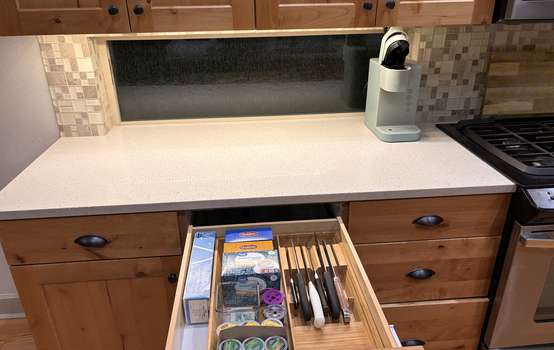
I keep my surfaces totally clear, less is MORE! See my kitchen organization post for more detail.


I would love to minimalize our lives. How much clothing, how many shoes? Get real basic for me please.

See my previous MM post about sticking to a color palette and this post about shopping for clothes during weight loss, which has some great tips from Herbies about clothing.

Can you be a minimalist with kids? Kids are bombarded with heavy consumerist messages and until a certain age they don't really understand ideas like "less is more." How can you help kids understand a minimalist philosophy? 

Here are some thoughts from minimalist families, as shared on Facebook:

"I think if they are raised in that way with you as an example, they will appreciate the things they DO have more, while maybe not fully understanding it until they are grown ups. Have you ever heard a kid say, 'I have enough toys, I don't need anything else.'?"

"The toy thing is a constant evolution in our household. I purge toys that the kids (1.5 and 4.5) no longer play with. Anything that is missing a part or doesn't work = tossed. New toys require an old one getting tossed or donated. When family and friends ask what the kids want or need for holidays and birthdays we always recommend experience gifts — a plane ticket to visit, take the kids out for a meal, to a playground, swimming lessons, skating lessons, gift certificates to an art studio, etc. The kids have fond memories of the things they did with their family instead of what they were bought. My family is on a minimalist path - downsizing from a townhouse to a 2 BR condo and the kids are happier than ever. Less space = less stuff = more life!"

"For my step-son, it took a few volunteer hours at the local food bank where he was able to play with kids whose families were 'down on their luck'...some of them living out of their cars. He saw that it was possible to have fun and play all day long without an Xbox or hundreds of toys to choose from and he was able to kinda grasp the idea that not EVERY one has all of the latest and greatest toys... Each time we went he understood more and more. He wanted to rid himself of the excess toys he already had and we were able to have a meaningful discussion about his 'need' for more whenever the topic came up (like while shopping and he felt he just HAD to have something new). We donated a lot of toys and clothing to his new friends at the food bank. We also had the one 'new' item in, one 'old' item out rule."

How do you combine a minimalist lifestyle with holidays? Specifically, gifts you receive. We always get a slew of things we don't need. I'm always terrified to donate that gift my mom will ask about later!! 

I covered this a little bit in my MM post about the the 1-in, 1-out rule. That aside, we've really stressed to our families we prefer they make charitable donations in our names, or to buy us things we actually need. 


Does owning and using overpriced electronics, such as Apple products, run counter to a "minimalist lifestyle" — especially since Apple's "iGadgets" do so much "thinking" for the user?

You don't have to have "cheap" items to be a minimalist. It's more about buying what you need and purchasing more meaningfully. I have an iPhone 5.  Admittedly, it was very expensive, but I need it to do my job to the best of my abilities, so I think that's a more meaningful purchase than, say, $15 on shoes I'll hardly ever wear.

Isn't "minimalism" also performing everyday tasks and duties with the least amount of material and equipment possible, and by using the most basic and simplest of tools and machines, as well? :o)

Not in my interpretation. Minimalism is also about efficiency. A pencil and piece of paper is more minimalist, but not necessarily more efficient. On that note, technology often is more minimalist. Take the computer, for example — we can be totally paperless now thanks to scanning, etc. If we take away computers, and go back to pencil and paper since we no longer have scanners, computers and printers, is that really more minimalist? We all have to find our own balance — and interpretation — with minimalism. For me, efficiency (and the least amount of waste, including waste of time) is a big goal of my minimalism.

What do you like to give to people for gifts? 

I make donations in their name (preferably to a charity of their choice), buy them something they truly need, give them money (so they can buy what they need) or make them food :)


How in the world you can be a minimalist AND a gourmet cook? Don't you need a large kitchen full of fancy equipment?

I don't consider myself "gourmet" by any stretch of the imagination — I'm an everyday home cook at best. I can't afford fancy equipment and have a fairly minimalist kitchen. 

See my former MM posts, Minimalist Cooking Necessities and Kitchen Essentials.

If everyone in the country is a minimalist, do you think the economy will fall apart? 

I'm no economist, but I'm inclined to think our economy would improve drastically if everyone become a minimalist or "minimized" in some way. So many people are living beyond their means putting themselves in debt, overextending themselves, etc. We've seen so many financial crises in the last few years and I have to believe cutting back would help. Plus if everyone became a "minimalist", we would be taking a giant step away from the "consumerism" society and mindset we're currently living in. We'd get away from the toxic attitude that bigger is better, that whatever we have isn't enough and we must always seek more, more, more. I lived abroad for a while and it was wonderful to be away from that. Further, a reduction in waste (not just spending, but in physical waste like unused goods) would also help our environment.

My partner is fretting my "downsizing." Most everything I put in a charity pile he insists we may need someday and absconds with it. What to do?

Read my MM post about clutterbugs (those that can't let go of stuff). If both you (and he) understand why he feels this way, you can work to overcome it and really start to remove, reduce and reuse. 

WHOLE: An Excerpt from Dr. T. Colin Campbell's Brand-New Book PLUS Giveaway

Posted by: Lindsay S. Nixon |

Exciting news, Herbies! Dr. T Colin Campbell and Dr. Howard Jacobson's new book, WHOLE, has been released! and it's already a New York Times Bestseller! I got a chance to read this amazing book a few months ago and I can't recommend it enough. I'm delighted to have the opportunity to share an excerpt of the book with you today AND I'm giving away THREE copies of the book! 

(p.s. Fun fact: Dr. Campbell and I have the same publisher!)

So what's the difference between The China Study and WHOLE? 

Dr. Campbell: The China Study was basically a summary of the evidence and what I thought it showed. It was based on my own career, of course, but also involving the work of others. Whole, in contrast, is to count why. In other words, the China Study was: Here's the scene, here's the evidence, here's what we think it says. And Whole is sort of an explanation of why this evidence actually works. It really has a dramatic effect on health - even more than I thought when I finished writing The China Study. I mean I was pretty confident in what I was saying, of course, but nonetheless, since that book was published, what we now know about this is just truly dramatic."**

I also was interviewed by co-author Dr. Howard Jacobson about living the plant-based lifestyle, which was a BLAST. And you can listen to the interview! (The link downloads an mp3.) And don't forget to check out The China Study Cookbook, which was recently released as well.


An excerpt from WHOLE:

Making Ourselves Whole

“If a little bird were to take a grain of sand in its beak from the seashore and somehow manage to fly it to the furthest quasar in the universe, and if it returned and repeated the process until all the sand of the oceans both from the beaches and the bottoms were gone, eternity would be just beginning.”—Anonymous, written on the wall of the Maté Factor Cafe, Ithaca Commons, NY

If this book does nothing else, I hope that it convinces you that we need to change the way we think about health. We must recognize nutrition as a cornerstone of our health-care system, not a footnote. We must also recognize the limitations of our reductionist paradigm and learn to accept the validity of evidence beyond what that paradigm allows us to perceive. If we are truly to understand the meaning of nutrition, its effect on the body, and its potential to transform our collective health, we must stop seeing reductionism as the only method by which to achieve progress and start seeing it as a tool, the results of which can only be properly evaluated within a wholistic framework. And we must be willing to embrace wholism beyond the realm of nutrition. The body is a complex system; bodies gathered together in societies are even more complex; and human life, interwoven with all of nature on this planet, is complex beyond our imagining. We cannot afford to ignore this complexity any longer.

I realize that what I’m proposing here is a tectonic shift in the way we think about nutrition, medicine, and health. The process may not be easy. But it is possible. I know, because this shift is one I experienced myself over the course of my career.

My doctoral dissertation, written over fifty years ago, was on the greater biological value of animal-based protein. I believed then, as firmly as any meat-loving cattle baron, that there was no better, more beneficial food than the protein we received from meat and milk. But as you have seen here and in The China Study, my position today is very different. I am now convinced that there is no healthier way to eat than a whole food, plant-based diet, without added fat, salt, or refined carbohydrates.

For me, the source of that shift was evidence—the empirical, peer-reviewed evidence produced over many years by my own research group. It was bolstered in later years by the evidence produced by my colleagues in clinical medicine, who have been independently and convincingly documenting the WFPB diet's [Editorial Note: WFPB= whole foods, plant-based. Dr. Campbell loves his acronyms, just like me :)] ability to reverse serious diseases in ways unmatched by pills and procedures.

But this shift in thinking required more than just evidence. It also required a shift in my understanding of the body, and therefore in the way I understood evidence related to the body’s functions. And this shift is one that I hope this book will help you achieve, as well.

I’ve given much thought to the next steps that individuals who are sufficiently convinced by what I’ve shared, both here and in The China Study, and who want to help create change, might take. The most important step is to change the way you eat. The diet is simple: eat whole, plant-based foods, with little or no added oil, salt, or refined carbohydrates like sugar or white flour. (Though it may take some research, there are cookbooks out there that will fit your needs—more of them now than ever before.) There is nothing more convincing than experiencing the change for oneself. That crucial shift in the way we think about our health will happen, one person at a time. Eventually, policy will begin to change. Industry, deprived of the income produced by ill health and our ignorance, will follow.

It’s time for us to begin a real revolution—one that begins by challenging our individual beliefs and changing our diets, and ends with the transformation of our society as a whole.


GIVEAWAY!

**Giveaway now closed! Winners were chosen randomly and notified via email.**

For your chance to win a copy of WHOLE, leave a comment telling us what you think is the biggest misconception about nutrition. Contest limited to U.S. and Canada (sorry!). There will be three winners announced.


(This is an old picture of Dr. Campbell & I from 2011 at HTLA. I'm lucky to see him once or twice a year when we both speak at various conferences. I also adore (adore!) his wife. Dr. Campbell once told me the work I did was important. I'll never forget that. I also don't think he'll ever know how much his comment meant to me!!)

**If you'd like to read more from the V for Veg interview with Dr. Campbell quoted above, you can read the entire article on philly.com.